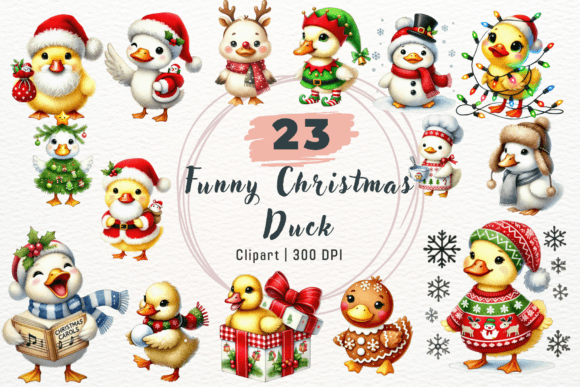
Watercolor Funny Christmas Duck Clipart
When I sit down to plan a content calendar for a lifestyle blog or an affiliate site, the visual strategy is just as critical as the copy. Readers scroll fast, and their first impression is almost always visual before they read a single word. Recently, I evaluated a specific graphic design asset that caught my eye: Watercolor Funny Christmas Duck Clipart. As a digital publisher who cares deeply about editorial quality and brand consistency, I wanted to see if this playful asset could hold its own in a professional publishing workflow. The short answer is yes, provided you understand exactly where it fits and how to style it.
The Editorial Mood and First Impression
Upon loading the file, the immediate takeaway is the texture. Unlike flat vector icons which can sometimes feel sterile or overly corporate, watercolor illustrations bring a human touch. This Watercolor Funny Christmas Duck Clipart exudes a mood that is simultaneously festive, whimsical, and approachable. It feels less like a rigid corporate holiday card and more like something you might find in a high-end lifestyle magazine or a curated Pinterest board dedicated to cozy winter living.
This aesthetic naturally supports niches that value personality over formality. If your website focuses on parenting, home decor, seasonal crafting, or even lighthearted personal finance tips for young families, this asset bridges the gap between "fun" and "polished." It avoids being childish by maintaining a sophisticated color palette typical of modern watercolor techniques. For bloggers aiming to build trust through relatability, this kind of creative design helps soften the reading experience, making complex topics feel more accessible.
Real-World Publishing Applications
In my daily workflow, I rarely use a single image type across all platforms. Instead, I adapt core design assets to fit different touchpoints. Here is how this duck illustration integrates into a real content marketing strategy:
- Pinterest Pins: This is perhaps the strongest use case. Pinterest is a visual search engine, and whimsical, colorful illustrations often outperform stock photos of people. You can overlay text like "Last Minute Holiday Gift Ideas" on a clean background next to this duck to create a high-click-through-rate pin.
- Blog Featured Images: When designing article headers, using this clipart as a central anchor allows you to balance heavy headline text. It breaks up the white space and draws the eye toward the title without overwhelming the reader.
- Digital Guides and Lead Magnets: If you are creating a downloadable PDF, such as a "Holiday Hosting Checklist" or a "Winter Wellness Plan," this asset works beautifully on the cover page. It signals to the user that the content inside is helpful but also enjoyable to read.
- Newsletter Graphics: Email open rates depend heavily on subject lines and preview text, but the body of the email needs visual breaks. Inserting this clipart between paragraphs can increase dwell time by giving the eyes a pleasant rest point.
- Social Media Stories: For Instagram or Facebook stories, this illustration adds a festive flair to quotes or announcements. It aligns well with small business branding that wants to appear friendly and community-focused.
Supporting Content Performance and Brand Identity
Using consistent visual hierarchy is key to professional-looking content pages. When you introduce a unique illustrations style like this, you begin to establish a distinct brand identity. Over time, readers will recognize your content by its visual cues alone. A cohesive look builds reader trust because it suggests attention to detail.
Furthermore, this asset supports better category recognition. If you have a recurring series, such as "Festive Fridays" or "Holiday Hacks," using variations of this duck theme creates a visual shorthand. Users scanning your archive will immediately know what to expect from that section. This is particularly effective for affiliate marketing content, where clear categorization helps guide users toward product recommendations without feeling salesy.
Strategic Placement and Design Tips
To get the most out of this commercial design element, placement matters. It thrives in areas where you want to inject warmth. Consider using it in hero images for seasonal posts, as decorative accents in the margins of your editorial layouts, or as part of a collage for social media graphics.
However, there are places where caution is required. This is not a modern design asset suited for minimalism. It should be used carefully in small mobile thumbnails where the details might blur. It also does not belong in serious professional niches, such as legal advice, medical journals, or B2B corporate reports. In those contexts, the whimsical nature of a funny duck would undermine the authority of your message.
Additionally, avoid placing this asset on busy backgrounds or low-contrast colors. Watercolor textures rely on subtle gradients; if the background competes with the illustration, the visual impact is lost. Always ensure there is enough negative space around the duck so it can breathe.
Practical Publisher Notes for Implementation
Before dropping this asset into your CMS or Canva template, there are several technical checks every publisher should perform:
- Cross-Device Testing: View the image on both desktop and mobile screens. Ensure it doesn’t look pixelated or awkwardly cropped on smaller devices.
- Typography Pairing: Test the clipart alongside various font styles. It pairs exceptionally well with serif fonts for a classic editorial look, but can also work with handwritten fonts for a more personal touch. Avoid pairing it with rigid display fonts unless you are going for a deliberate contrast.
- Contrast and Readability: If you are adding text over or near the image, check the contrast. Use a semi-transparent box behind text if necessary to maintain readability.
- File Size Optimization: Web performance is crucial for SEO. Even though this is a raster-style look, ensure the file is compressed properly. Large files slow down load times, which hurts your ranking and user experience.
- Licensing Verification: Finally, always confirm the commercial license. Since you are using this for monetized websites, affiliate pages, or paid content products, you need assurance that you are legally allowed to use the digital download for profit. Most marketplaces provide clear terms, but never assume.
In conclusion, Watercolor Funny Christmas Duck Clipart is more than just a cute sticker; it is a strategic tool for enhancing website presentation. By integrating it thoughtfully into your content marketing efforts, you can create a warmer, more engaging environment for your audience. Whether you are updating your website header for the holidays or designing a new printable design for your email list, this asset offers the perfect blend of festive charm and editorial polish.