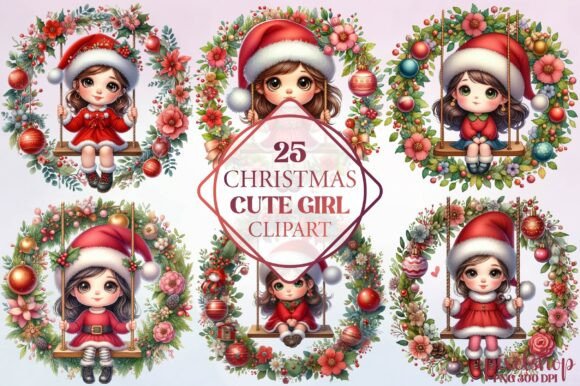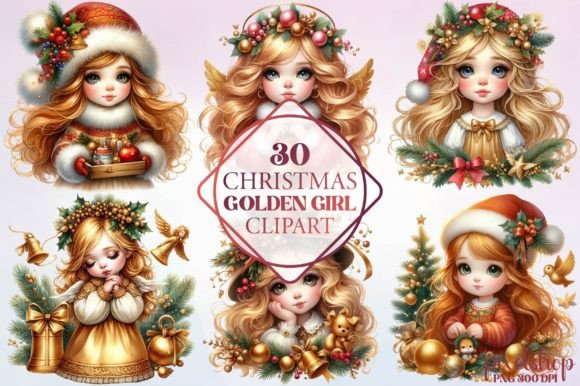
Watercolor Christmas Golden Girl Clipart Review
As a designer who spends half my life staring at stitch density charts and the other half worrying about how thread tension looks on cotton twill, I don’t just buy clipart; I evaluate potential. When I first pulled up Watercolor Christmas Golden Girl Clipart, I wasn’t looking for something cute to slap on a sticker. I was looking for a design that could hold its own in a real-world embroidery project without falling apart under the needle or looking muddy after three washes. This piece sits squarely in the Illustrations category, but in our world, that label barely scratches the surface of what matters: usability, aesthetic appeal, and commercial viability.
First Impressions: Mood and Visual Personality
The immediate takeaway from this design is its soft, nostalgic charm. The watercolor aesthetic brings a warmth that digital vector art often lacks, creating an inviting mood perfect for the holiday season. The "Golden Girl" theme suggests elegance and timeless style, which translates beautifully into textile work. Unlike rigid geometric shapes that can look sterile when stitched, the organic edges of this illustration promise a softer, more artisanal finished product.
Visually, the layout feels balanced. It isn’t cluttered with unnecessary details that might get lost in a small hoop, nor is it so sparse that it looks unfinished on a large canvas. The visual personality is friendly yet sophisticated, making it versatile enough for high-end boutique items or casual handmade gifts. For an embroidery project like a custom tote bag or a baby onesie, this kind of approachable elegance is exactly what drives customer engagement. It feels personal, not mass-produced.
Real-World Application: From Screen to Stitch
I always imagine where a design will live before I commit to it. Let’s talk about practical scenarios. If I were preparing inventory for an Etsy shop, Watercolor Christmas Golden Girl Clipart would be a strong contender for several key products. Imagine this embroidered on a heavyweight canvas tote bag. The contrast between the rugged fabric texture and the delicate watercolor style creates a compelling tactile experience. It elevates a simple utility item into a fashion statement.
Consider also a sweatshirt embroidery application. Holiday apparel is huge during Q4, and buyers are moving away from loud, neon graphics toward cozy, muted tones. This design fits that trend perfectly. On a cream or heather grey sweatshirt, the golden hues would pop without being overwhelming. It works equally well as a small chest pocket accent or a larger back print, depending on the hoop size available in your digitizing software.
For smaller items, such as an embroidered patch or a kitchen towel, the design’s clarity is crucial. A tea towel is a classic gift item, and placing this design near the hem adds a touch of whimsy. However, you have to think about scale. On a tiny cap or a pair of baby booties, every pixel counts. The intricate details of the watercolor effect need to be translated carefully by your digitizer to ensure they don’t bleed into each other during stitching.
Where to Exercise Caution
No design is perfect for every surface. While this clipart has great potential, there are specific situations where it requires careful handling. First, avoid using this on highly textured fabrics like bouclé or thick wool blankets unless you are using a heavy-duty stabilizer. The needle penetration might distort the delicate lines of the watercolor effect. Similarly, thin or stretchy fabrics like jersey knits can pucker if the stitch density is too high. In those cases, you might need to reduce the fill stitch area or use a tear-away stabilizer to maintain the integrity of the design.
Dark fabrics present another challenge. Watercolor designs rely on light and shadow to convey depth. On black or navy fabric, the lighter colors might get swallowed up by the background unless you use a substantial underlay or white backing. Curved surfaces, such as the front panel of a baseball cap, can also distort the perspective. If the original illustration is flat, stretching it over a curve can make the girl’s face or outfit look slightly warped. Always test on scrap fabric first to see how the thread colors interact with your specific material.
Stitch Clarity and Detail Management
The success of any machine embroidery design hinges on how well the digitizer interprets the source image. With a watercolor-style illustration, the risk is losing the "painterly" feel when it becomes thousands of individual stitches. If the satin stitch edges are too jagged, the softness is lost. Conversely, if the fill stitch is too dense, the design becomes stiff and uncomfortable to wear. A good digitizer will use varying angles in the fill stitch to mimic the brush strokes of the original artwork, preserving the artistic intent.
Also, pay attention to small details. Tiny decorative accents or fine lines might disappear entirely if the final product is meant to be frequently washed. Embroidery is durable, but extreme wear and tear can fray even the best stitches. For items like aprons or workwear, consider simplifying the design or reinforcing high-stress areas. For a personalized gift like a pillow cover or nursery decor, however, the full detail will shine and add significant perceived value.
Impact on Brand and Sales
From a business perspective, the right design does more than decorate; it sells. Watercolor Christmas Golden Girl Clipart contributes to a brand image of quality and care. Customers today are savvy; they can tell the difference between a rushed, generic graphic and a thoughtfully integrated design asset. When you use this clipart in your digital product previews or printable mockups, it signals professionalism. It suggests that you understand aesthetics and craftsmanship.
This design enhances handmade presentation. Whether you are selling at a craft fair or shipping directly to a customer via an online store, the visual appeal of the finished product is your first marketing tool. A well-executed embroidery project featuring this clipart invites social media shares. People love sharing beautiful, festive items, and this design has that "shareable" quality. It boosts customer trust because it looks intentional and polished, reducing the likelihood of returns due to dissatisfaction with the design's appearance.
Practical Designer Notes for Implementation
Before you load this file into your machine or send it to a production partner, follow these essential steps:
- Test on Scrap Fabric: Never go straight to the final product. Run a sample on the exact fabric type you plan to use. Check for puckering, thread breaks, or color bleeding.
- Check Thread Contrast: Ensure the chosen thread colors provide enough contrast against the fabric. Low contrast can make the design invisible or hard to read.
- Review Stitch Density: High density saves time but can make the fabric stiff. Low density is comfortable but may show the fabric through. Find the balance that suits your end-use.
- Confirm Hoop Size: Make sure the design dimensions fit comfortably within your standard hoops, leaving room for stabilization and margin.
- Inspect Small Details: Zoom in on the digitized file. Are the tiny curves smooth? Do the corners look sharp or rounded? Adjustments may be needed.
- Test in Black and White: Convert the design to grayscale to check for value distribution. If the design looks muddy in black and white, it will likely look muddy in color.
- Compare Backgrounds: View the design on both light and dark backgrounds to ensure versatility.
- Use Proper Stabilizer: Match your stabilizer to your fabric weight. Heavy fabrics need heavy stabilizers; light fabrics need lightweight options.
- Verify Licensing: Before selling finished items or using this as part of a commercial embroidery package, double-check the license terms. Some clipart allows personal use only, while others permit commercial sales of physical goods.
In conclusion, Watercolor Christmas Golden Girl Clipart is a strong candidate for designers looking to add a touch of holiday elegance to their craft business. It bridges the gap between digital art and tactile craft effectively, provided it is digitized with care. By paying attention to fabric choice, stitch settings, and licensing, you can turn this simple illustration into a standout small shop product that resonates with buyers and stands the test of time.