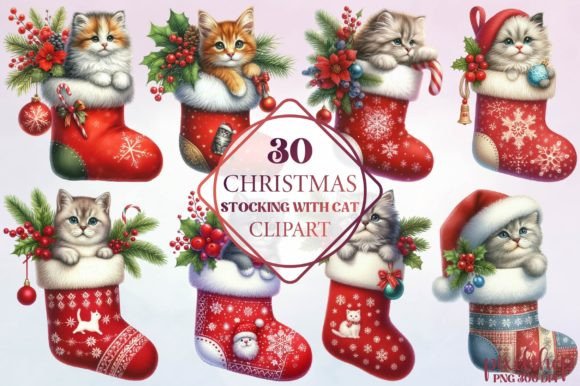
Christmas Stocking with Cat Clipart in Illustrations
As a brand designer who spends half my day refining logo marks and the other half stress-testing packaging layouts for local clients, I am always scanning for assets that strike that delicate balance between festive charm and professional usability. When I first encountered the Christmas Stocking with Cat Clipart, it wasn’t just another seasonal doodle; it felt like a strategic component waiting to be integrated into a cohesive visual identity. This isn't about slapping a cute image on a flyer. It is about understanding how this specific graphic design asset can elevate small business branding, enhance product labels, and create an emotional bridge between a local shop and its community.
The immediate impression of this illustration is one of warm, approachable hospitality. Cats have long been symbols of comfort and home, and pairing them with a classic holiday stocking creates a mood that is undeniably cozy yet modern. For a local business owner—whether you run a boutique coffee roastery, a handmade skincare line, or a family-owned bakery—this asset suggests a brand personality that is friendly, organic, and deeply rooted in community values. It avoids the overly glossy, corporate feel of big-box retail graphics, leaning instead into the "handmade" aesthetic that consumers crave today. It feels soft, decorative, and distinctly personal, making it an excellent candidate for businesses that want to project elegance without stiffness.
Integrating Seasonal Assets into Real-World Brand Identity
In the world of local business branding, consistency is king. A common mistake I see among creative entrepreneurs is treating seasonal promotions as isolated events rather than part of the broader brand narrative. Using this Christmas Stocking with Cat Clipart allows you to weave holiday cheer directly into your existing visual hierarchy. Imagine this asset appearing not just on a Facebook post, but subtly embossed on the wax seal of a premium candle box, or printed on the hang tags of a limited-edition winter scarf collection.
This type of illustration supports stronger first impressions by providing a recognizable visual anchor. When customers see your brand’s unique take on holiday imagery, they begin to associate that warmth with your products. It improves customer trust because it signals attention to detail. A well-integrated graphic design asset shows that you care about the unboxing experience, which is critical for product sellers and e-commerce brands. Whether you are designing physical packaging or digital marketing visuals, this clipart serves as a versatile element that can unify your campaign across multiple touchpoints.
Strategic Applications for Packaging and Promotional Materials
The versatility of this asset extends far beyond simple decoration. In practical terms, here is where I recommend deploying this illustration for maximum impact:
- Product Labels and Stickers: Use it as a focal point on gift boxes or jars of homemade treats. The circular or contained nature of many stocking designs works beautifully within label constraints.
- Packaging Accents: Integrate it into the corner of shipping boxes or as a watermark on tissue paper. This adds a layer of perceived value to your product mockups.
- Thank-You Cards and Inserts: Pair this illustration with a handwritten-style font on thank-you cards included in orders. It reinforces the personal connection between the maker and the buyer.
- Social Media Graphics: Utilize it in Canva templates for Instagram stories or Pinterest pins. It provides a ready-made hero graphic that draws the eye in a crowded feed.
- Menu Graphics and Price Lists: For food businesses or cafes, use it to frame special holiday menu items or seasonal drink offerings.
- Seasonal Campaign Visuals: Create a cohesive look for your website banners and email newsletters during the December rush.
By applying this asset across these channels, you achieve better shelf appeal and more polished marketing visuals. It transforms a standard transaction into a branded experience. For instance, a florist could use this clipart on their holiday bouquet wrapping, while a soap maker might print it on the back of their artisanal bars. The key is to treat it as part of your editorial design strategy, ensuring it complements your core messaging rather than distracting from it.
Where Caution Is Required: Avoiding Design Pitfalls
Not every graphic fits every context. As a designer, I must advise against using this playful, decorative asset in scenarios that demand strict formality or extreme legibility. If you are working on formal corporate branding for a law firm or a financial institution, this illustration will likely clash with your desired tone of authority and precision. Similarly, luxury minimalist brands that rely on negative space and stark typography should avoid cluttering their layout with ornamental clipart.
Be particularly careful when placing this asset on very small labels or ingredient-heavy layouts. If the details of the cat or the stocking become muddy at reduced sizes, it will harm your visual hierarchy rather than help it. Do not place this graphic over low-contrast backgrounds where it may disappear, and never let it compete with critical legal information or pricing text. The goal is to support the content, not obscure it. If your design feels crowded, scale back the asset or remove it entirely to maintain clarity.
Practical Designer Notes for Implementation
Before committing to this asset for commercial design projects, there are several technical checks every savvy entrepreneur should perform. First, test it on real packaging mockups. A graphic that looks vibrant on a screen may appear dull or pixelated when printed on textured paper. Check the black and white usage to ensure the icon holds up in monochrome, which is essential for stamping or foil-stamping applications.
Preview the asset on small labels to verify readability. Test it alongside your brand colors to ensure harmony; sometimes a slightly desaturated version of the asset works better than the original saturated file. Compare it with competitor packaging to ensure your brand stands out while still feeling relevant. Inspect the PNG transparency for clean edges, and if available, review the SVG or vector editability to allow for future scaling without quality loss.
Typography pairing is also crucial. Test this illustration beside serif fonts for a classic look, sans serif fonts for a modern twist, script or handwritten fonts for a personal touch, and display fonts for bold headlines. Finally, and most importantly, confirm the commercial license before using it for client work, business branding, or physical product sales. Ensure you have the rights to reproduce the illustration on tangible goods and digital platforms. By following these steps, you ensure that your use of Christmas Stocking with Cat Clipart contributes to professional branding and sustainable business growth.