Christmas Pendulum Clock Clipart: A Designer’s Review
When I sit down to evaluate a new machine embroidery design, my first question is always practical: does this actually work on the hoop? There are plenty of designs that look stunning in a digital preview but fall apart once the needle starts moving. Recently, I’ve been looking closely at the Christmas Pendulum Clock Clipart for potential use in my small business inventory and client commissions. As an illustrator turned embroiderer, I appreciate the aesthetic pull of vintage holiday motifs, but my eyes are trained to spot potential pitfalls before they become expensive mistakes.
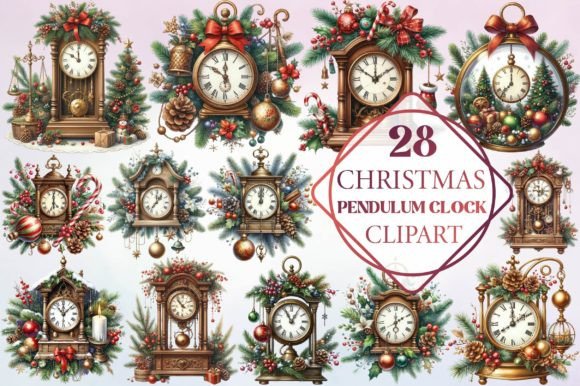
This particular asset falls under the broader category of Illustrations, which often implies a vector or high-resolution raster source rather than a pre-digitized file. For those of us working in the craft business, understanding the difference is crucial. The charm of the Christmas Pendulum Clock lies in its nostalgic silhouette—the swinging pendulum, the classic Roman numerals, the cozy winter vibe. It screams "holiday gift," but translating that static image into a stitched embroidery project requires careful planning.
The Visual Appeal and Mood
The first thing that strikes me about the Christmas Pendulum Clock Clipart is its strong graphic quality. Vintage clocks are inherently geometric, which generally plays well with digitizing software. The clean lines suggest that a satin stitch outline could define the shape beautifully without becoming muddy. However, the challenge lies in the details. Pendulum clocks often feature intricate inner workings or delicate decorative elements near the top arch. If these are too fine, they risk getting lost in the fabric texture or collapsing under the tension of the thread.
Mood-wise, this design evokes warmth, tradition, and the slow passage of time during the holidays. It fits perfectly into the current trend of "cottagecore" or "modern rustic" aesthetics that dominate platforms like Etsy. It feels less like a generic clipart and more like a curated design asset. This emotional resonance is vital for personalized gifts. When a customer buys a custom embroidered item, they aren’t just buying thread; they are buying a feeling. This clock motif taps directly into that desire for comfort and seasonal cheer.
Real-World Application: From Screen to Stitch
I recently considered using this design for a batch of custom aprons for a local bakery’s holiday promotion. The idea was to have the clock centered on the chest area, perhaps with the phrase "Time for Treats" below it. In theory, it’s a perfect match. In practice, aprons are made from durable cotton duck or denim, which can be thick. The key here is stitch density. If the digitizer (or the conversion process) packs the fill stitches too tightly, the fabric will pucker and distort around the clock face. Conversely, if the density is too low, the background might show through, ruining the crispness of the clock’s white enamel look.
Another scenario involves tote bag design. Canvas bags are forgiving, but the weight of the bag can cause the embroidery to sag over time if not anchored properly. A pendulum clock has vertical lines that draw the eye downward. If the design is large, it becomes a statement piece. I’d recommend scaling this down slightly for a tote, perhaps placing it off-center for a more modern, asymmetrical look. This approach also reduces the amount of stabilizer needed, making the final product softer and more comfortable to carry.
For baby embroidery, such as on muslin blankets or onesies, the scale changes entirely. Here, the clock should be small and simple. Complex gears or tiny text might be inappropriate for a baby’s sensitive skin or simply impossible to stitch clearly on such a small surface area. A simplified version of the Christmas Pendulum Clock Clipart, focusing on the main body and a bold pendulum swing, would work best. This ensures clarity and safety, avoiding any hard edges or dense areas that might irritate a newborn.
Where to Use It Carefully
Not every canvas is suitable for every design. I need to highlight where this specific clipart might struggle. First, avoid using it on highly textured fabrics like heavy tweed or bouclé. The irregular surface will interfere with the running stitch or satin stitch paths, causing the machine to skip or create uneven lines. Similarly, stretchy knits require a strong stabilizer backing. Without it, the circular motion of the pendulum design could stretch out of shape after just one wash.
Small hoop sizes are another limitation. If you plan to embroider this on a cap or a small patch, ensure the design is resized appropriately. Trying to cram too much detail into a 4x4 inch hoop can result in a cluttered mess. The beauty of the clock is in its proportions; squishing it down loses that elegance. Additionally, dark fabrics present a contrast challenge. If the original clipart relies on white highlights or thin black outlines, you’ll need to choose your thread colors wisely. A light-colored thread on a dark background might get lost if the stitch width isn't substantial enough.
Technical Considerations for Designers
Before committing this design to production, there are several technical steps every professional should take. First, always test on scrap fabric. This allows you to check how the thread colors interact with your specific material. Does the gold thread look metallic or flat? Does the red blend into a burgundy sweater? These nuances matter for the final presentation.
Review the stitch density carefully. High-density fills save time but can make the finished product stiff. For items like pillow covers or tea towels, a lighter touch preserves the softness of the fabric. Also, inspect the small details. Are the Roman numerals legible? Is the pendulum bob distinct? If these elements are too small, consider simplifying the design by removing unnecessary internal lines or merging adjacent shapes.
Testing in black and white mockups is a pro tip. It strips away color distractions and lets you see the actual structure of the design. If the shape reads clearly in grayscale, it will likely stitch well. Furthermore, confirm the licensing terms. Since this is a clipart asset, ensure you have the right to use it for commercial purposes. Selling finished goods requires different permissions than selling digital files. Always err on the side of caution and keep records of your licenses to protect your Etsy seller shop or boutique brand.
Final Verdict
The Christmas Pendulum Clock Clipart is a strong candidate for holiday-themed projects. Its classic imagery appeals to a wide audience, from grandparents gifting to grandchildren to young couples decorating their first home. With proper digitization attention to hoop size, stabilizer choice, and thread colors, it can elevate a simple handmade product into a premium custom apparel item. Whether you are creating embroidered patches, sweatshirt embroidery, or digital embroidery files for others, this design offers versatility and timeless charm. Just remember: good design starts with respect for the medium. Test thoroughly, plan meticulously, and let the craftsmanship speak for itself.